
Trace a test through PagerDuty
On the Alerts page, choose Send test alert in the destination’s controls. The test can page a person. Check that both the trigger and recovery were accepted.
Open the service’s alert history and include resolved alerts. Look for “Litebackup test alert firing” and its resolution. Both requests carry the same dedup_key. An incident grouping several alerts can stay open while another alert still needs attention.
Find the service that received the alert
If PagerDuty accepts the test but nobody gets paged, check the alert on the service first, then check its escalation policy and event rules. Litebackup sends triggers with critical severity. If the request itself fails, check the routing key and the account region. PagerDuty service regions.
Enable alerts
Check how many alerts are firing before choosing Enable delivery. Each server sends its open alerts immediately, then reports new alerts and recoveries for all enabled thresholds.
Add the destination from the server CLI (US endpoint)
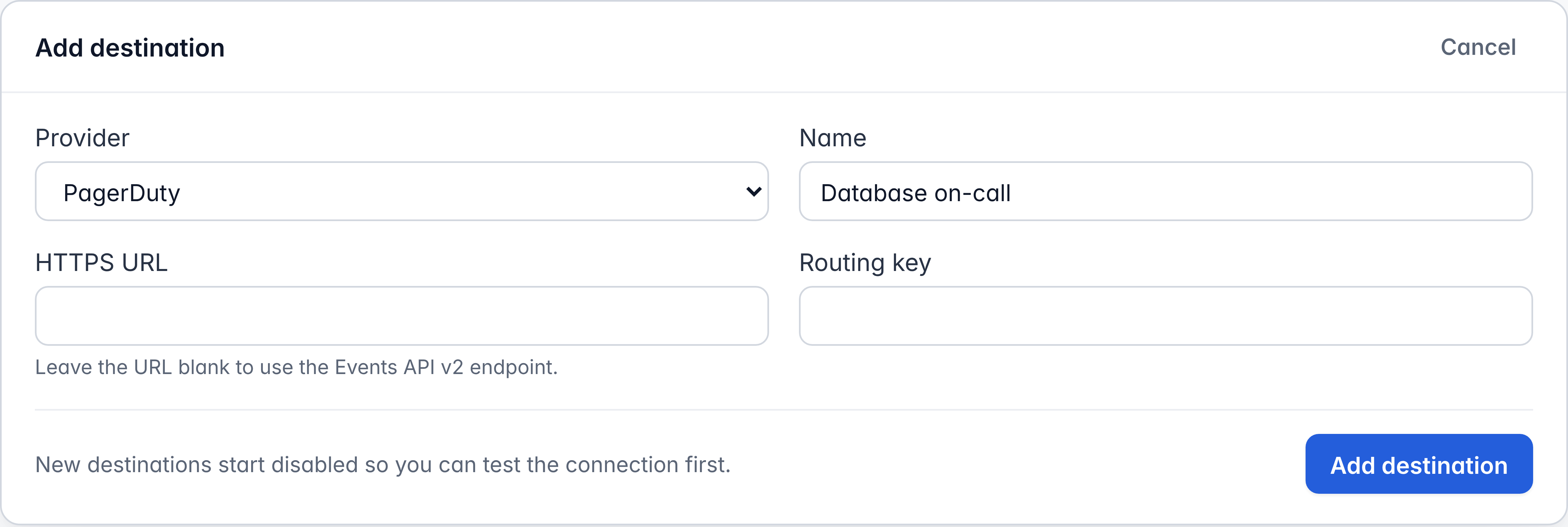
As an alternative to the console form, run this on the Litebackup server and enter the credentials at the prompt.
# Add the destination from the Litebackup server host.
litebackup server alert-destination add \
    --provider pagerduty \
    --name "PagerDuty"
Install
Install Litebackup and back up a SQLite database to start monitoring it. Choose another paging service or chat channel in the alert integrations guide.